Interpret The Requirement
Read a part drawing and identify the dimensions and features that matter to its intended function.
 Let’s Talk
Programs & Pathways
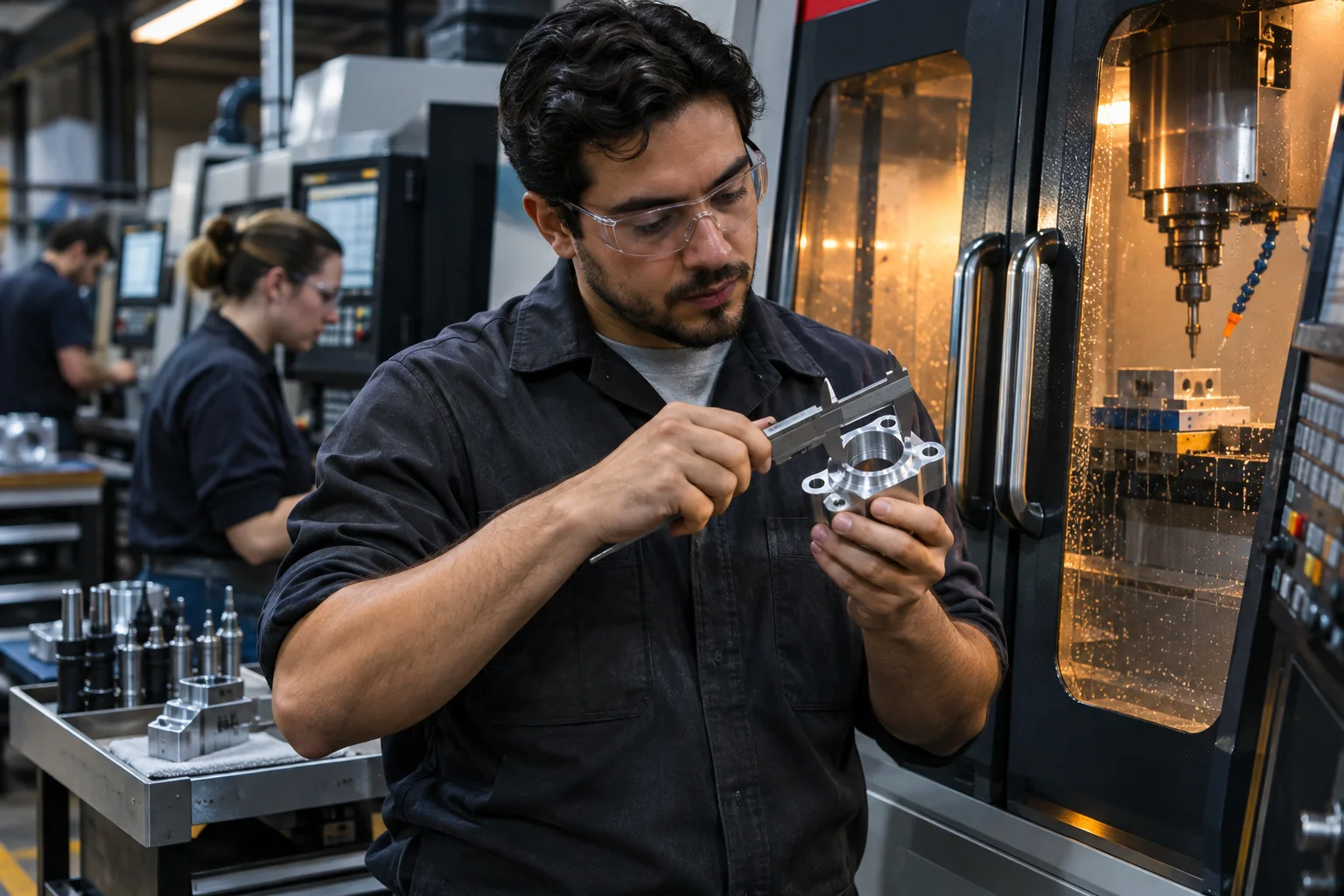
Explore the relationship between a technical drawing, a machine setup and a carefully measured finished part.
Where Detail Becomes A Discipline
Explore the relationship between a technical drawing, a machine setup and a carefully measured finished part.
Machining rewards close attention and a clear process. Learners start with the language of dimensions, tolerances and materials, then connect those ideas to supervised equipment demonstrations and inspection activities. Understanding why a measurement matters is as important as reading the number. A deliberate approach helps turn complexity into manageable steps.
Ask About This PathwayObserve. Practice. Review. Repeat.The Foundations
A useful starting point combines technical understanding with the habits that support good work.
The Learning Journey
Read a part drawing and identify the dimensions and features that matter to its intended function.
Discuss how tooling, material and sequence affect a machining task, with safety boundaries clearly defined.
Practice using appropriate measuring tools and recording results in a way another person can follow.

Make An Informed Choice
Before you enroll, talk through the schedule, prerequisites, practical activities and full cost. Ask how progress is reviewed and which tools or protective equipment you will need.
Requirements vary by role and location. Confirm any licensing or certification pathway separately and in writing.
Explore AdmissionsAdmissions can explain the current entry requirements and how much programming is included in the pathway.
Ask for the current training-equipment list and how access to practical activities is scheduled.
Look at instruction, lab access, assessment, complete costs and any credential claims in writing.
Good Questions Matter
Bring your questions about the learning experience, your starting point and the commitment involved. A clear conversation is a useful first step.
Keep Exploring
Explore the craft behind durable metalwork, from a clean first bead to a carefully measured fabrication.
Explore The PathwayDevelop a grounded understanding of electrical principles, diagrams and careful troubleshooting in a learning environment.
Explore The PathwayYour Next Chapter
Tell us what interests you. We’ll help you identify the questions, practical details and next steps worth exploring.